Thinking Spaces - November 6, 2015
Posted: Friday, November 6, 2015This session of Thinking Spaces: The Improvisation Reading Group and Speaker Series session is titled Change of the Century: How Ornette Coleman Transformed Improvised Music. The session will present David Lee. He is the author of The Battle of the Five Spot: Ornette Coleman and the New York Jazz Field. Taking Coleman's critically important 1959 engagement at the NY Five Spot as a point of departure, we will be examining the wider implications of his innovations on post-1950s improvised music.
Thinking Spaces - Friday October 23rd, 2015
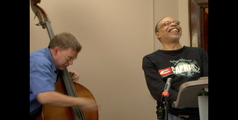
Posted: Friday, November 6, 2015Please join us for an afternoon with composer, musician, visual artist, craftsman, inventor, and educator Douglas R. Ewart. Mr. Ewart will talk about his transdisciplinary project Crepuscule, which he has expanded globally during the past decade. He will also discuss his intermedia work such as the sound installation Rio Negro. He will facilitate a communal improvisation with the audience. Please feel free to bring your instruments. When: Oct 23rd, 2015, 3:00-6:00 pm Where: Silence (46 Essex St.), Guelph This event is FREE AND OPEN TO THE PUBLIC! For questions: hkisiedu@uoguelph.ca
Think Pieces 7, Now Available!
Posted: Wednesday, September 9, 2015The Think Pieces project will explore the boundaries and borders of critical improvisation research as it engages with the social, political, and cultural issues that affect the lived lives of individuals around the globe. By bringing together the divergent voices of engaged writers and thinkers to ponder how improvisation provides novel insight into a deluge of problems, the Think Pieces project will offer a provocation to its readers: as improvisers/through improvisation, how and why do we think; how and why do we act?
Upcoming Colloquium: Improvisation, Collective Action, and the Arts of Activism
Posted: Wednesday, June 24, 2015Montreal, Quebec, July 9-11, 2015
UBC Colloquium 2015 - Launching Tomorrow!!
Posted: Friday, June 19, 2015The 2015 UBC IICSI Colloquium, in partnership with Coastal Jazz launches tomorrow!
Open Call for Applications - Koumaria Residency
Posted: Friday, June 12, 2015Koumaria 2015 Open Call By artist collective Medea Electronique Deadline to apply: July 1st 2015 Residency Runs from: SEPTEMBER 18th 2015 to SEMPTEMBER 30th 2015 Residency Theme: Remote Site-specific acoustic improvisations: A Recording Project Residency
Call for Applications for a Postdoctoral Fellow in Aboriginal Health
Posted: Friday, June 12, 2015Please click here to download a PDF call for applications. The Indigenous Peoples’ Health Research Centre (IPHRC) is seeking applications for a Postdoctoral Fellow to work on a multi-institutional, research project titled “Acting Out! But in a Good Way.” IPHRC past Postdoctoral Fellows have been successful in going on to secure employment in Canadian and U.S. universities and in health organizations.
Between the Ears: June 19-21, Kitchener-Waterloo
Posted: Friday, June 12, 2015Sly and his Family Stone exhorted us to "dance to the music" as if it were possible not to, but our bodies know better. Intrinsically linked, sound and dance are waves moving through space and time and occasionally bumping into things. Between the Ears 2015 is about these travels - we'll float our sounds on canoes through the lake at Victoria Park and origami boats in the Civic Square fountain and hear them in a dreamworld collage of coincident busking, and we'll see sound traced in wondrous choreographies from our most creative minds, performed by our amazing artists.
SOMETHING ELSE! Festival of Creative Music
Posted: Friday, June 12, 2015June 19-22, 2015 8:30 pm nightly ARTWORD ARTBAR 15 Colbourne St. Hamilton, Ontario
People of Good Will & Kazoo! Festival
Posted: Friday, April 10, 2015Saturday, April 11, 2015 - All Ages - $10.00 Black Spirituals - 9 PM Lido Pimienta - 8 PM Doors at 7:30 PM@ Heritage Hall (83 Essex St, Guelph, Ontario )